Bhutan is not the first country to come out with the idea of a Pedestrian day. In September last year, the South American country of Bolivia declared September 4 as the ‘National Day of the Pedestrian.’ About two million vehicles were taken off the streets in nine cities in Bolivia. Even public transport vehicles were not allowed on the day.
The empty streets in Bolivia became an entertainment avenue with street performers and artists coming out attracting masses of people, fitness and exercise instructors had the streets to themselves and marathons were also organised. Since it was a Sunday, the Bolivian president Evo Morales started the day jogging in public. The day was a success because unlike in Bhutan, it was not a weekly affair but an annual event.
Back home, after the government, through a cabinet directive, declared Tuesday as the Pedestrian Day, there has been a lot of discussion on the issue. While many applaud the initiative, there is an equal number of people (if not more) who are not happy with the decision. However, both groups of people seem to agree that it could be better implemented with more pragmatic inclusions.
Most of the discussions have been limited to the social media and informal debates around bars, homes and offices. The live discussion on BBS TV last Sunday was perhaps one of the first public discourses on the issue. The open poll where people could vote either in support of the Pedestrian Day or denounce it provided a very clear picture of the public opinion. Entertaining telephone calls also enabled people to voice out their thoughts openly. Diverse views flowed in and the program proved to be very revealing.
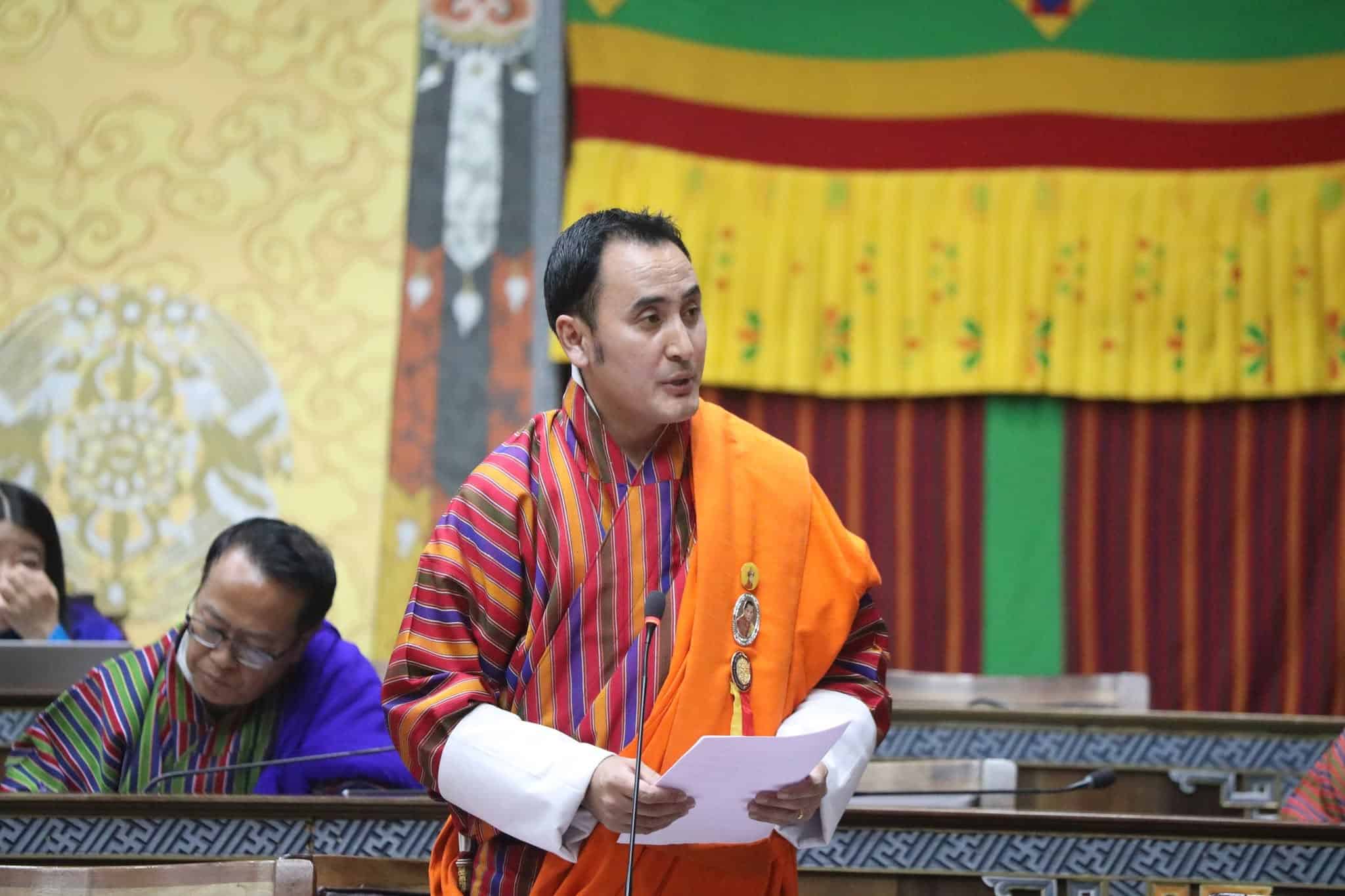
National Council MP TsheringPenjor sitting on the panel said the idea behind is very noble but it is badly implemented. He sent a strong message highlighting the plight of working mothers with new born babies who have to go home about three times to feed their babies and how it is unfair for them to be told to walk or to take taxies.
A working mother asked the Thimphu Mayor how fair it was on a young child to be woken up unusually early and to be told to walk or to be dropped at school before 8 am. Together with an official from the environment commission, almost all callers and the audience present at the discussion challenged the mayor with basic questions on moral rights to human rights.
Defending the criticism that the rule was ad-hoc and no prior consultation was held before it was implemented; the NEC official said that enough consultation was done while formulating the transport plan and the Pedestrian Day was mentioned in the plan. A prominent businessman pointed out that it was wrong to give wrong information on national TV as no consultation was done. However, it was clear that no independent consultation was ever done regarding the Pedestrian Day in itself. It was apparently hidden somewhere in the transport plan.
A senior journalist, Kunga T Dorji, said Bhutan cannot afford to have 52 Pedestrian Days in a year. With an economy worth only about US$ 1.4bn, the economic loss in the form of productivity and efficiency will be massive. He highlighted that the loss of productivity by 50% would translate to 26 days of economic loss which by crude figures would translate to about US$ 100mn which could build a new WangduephodrangDzong or equip all dzongs and lhakhangs in the country with state-of-the-art fire-fighting equipments.
Tshering, a woman from Paro, shared how she personally suffered from the Pedestrian Day rule. Over the phone, she said that she lost one of her parents at around noon on a Tuesday recently. Despite the hospital providing her with an ambulance to take the body to the cremation ground immediately, she opted not to avail the ambulance service because there was no use of it as she could not take her family and friends who had to make the arrangements at the cremation ground. She decided to take the body only when the rule was lifted at 6pm. “It was a terrible experience,” she said reiterating that she wants to question the government and let them know that “most of the people, I would say about 70%, are not happy with the rule.”
Not a single caller to the program supported the rule. Everyone called to raise their concerns and objections. One caller said the rule impedes on people’s rights and appears as if the government is trying to control the people’s right to use their own property (car). Another one said the government is bullying the public.
The poll results spoke the loudest at the program. Only about 1,300 votes went in favor saying it was “a move well received.” More than double the votes went against the rule clearly indicating that the Pedestrian Day has more naysayers and those who endorsed it.
In hindsight, it’s worth asking why no one from the cabinet who initiated the Pedestrian Day was on the show to justify their stand. Now it has become clear that the Pedestrian Day has been a failure. With a lot of questions having been raised, it will be interesting to see what the government will decide. If past experiences are anything to go by, it is very unlikely for the government to retract its decision because the DPT government doesn’t enjoy the reputation of doing so.
Pedestrian Day is a failure but it’s unlikely the government will change its mind,
August 8, 2012 at 4:08 pm
A simple solution: Close the business houses on Tuesdays and declare holiday rather be inconveniences to employees and other shoppers. If all business houses could do this in unison, Government would feel how important private sector is, if government is trying such model of creating indispensable situations!!
August 2, 2012 at 2:22 pm
Called it as taxis day
August 1, 2012 at 12:26 pm
Get real and do some proper analysis and dont perpetuate mis-information
BBS polls are as accurate about public opinion as they are about popular choice for voting for various talent show.
For the BBS Debates and polls, its one vote per number, BUT why were there more voters voting NO in the debate about “nationalisation of minerals” than total voters on the “pedestrian day” debate? People who feel strongly against something vote even if there is a cost to the vote. Dont jump to conclusions on adhoc votes without proper statistical sampling.
July 28, 2012 at 6:23 am
Could we be reacting too quickly and jumping to conclusions too soon? If it is the long-term benefits we are aiming at, we should have it long enough to determine if indeed it benefits. There will be trade-offs including the immediate conveniences, and we should work towards alleviating those while we still maintain the longer-term goals. Nothing’s going to be problem-free and perfect. If we keep bickering over the problems without putting our energy into fixing them, no reform will ever happen.
July 24, 2012 at 12:46 pm
The Minister responsible for giving the idea and NEC, the implementer should really listen to people and think carefully now. Did they do any good to the people and the country or are they still thinking that they are going a great service to the Nation?
July 22, 2012 at 12:42 pm
kAYDEE, one what basis do you assert that Pday has ‘conserved’ the environment and atmosphere?
Most people either do their running around on monday or postpone it to wednesday. Those who can’t go the long route using the ring roads thereby consuming more fuel and producing more emissions. Those who don’t have the ringroad option end up taking taxis and paying through their nose for it.
In effect, the goals of saving the environment and making people have both not been achieved.
And this article’s conclusion is correct. The DPT will never change their plans because they are really stubborn.
July 21, 2012 at 1:01 pm
Hello Everyone,
I would say, it should be left to the people to decide whether the pedestrian day is good or bad. There is always a mixed feeling to any decision taken by the government. On a larger note i think it is good (conserving environment and atmosphere). Why people are making hue and cry about PD is possibly because their comfort is lost on that day.
One comment on the Pedestrian day is why allow Taxis, Armed force vehicle and buses? Pedestrian day means no vehicle of any sort except the Ambulance. Taxis simply fly on that day and the chances of accident is high.
One suggestion is why not Sunday as pedestrian day as there is no school no office on that day.
Bhutan is democracy and therefore everyone has right to open up their mind.